Used Concrete Barriers in the UAE: The 12-Point Inspection Before You Hand Over the Cash
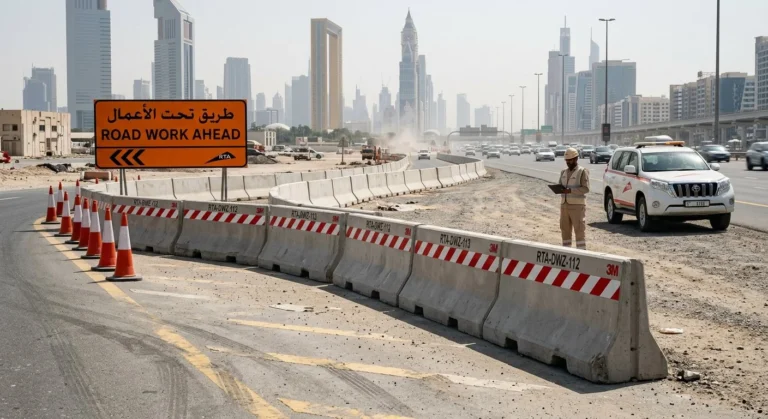
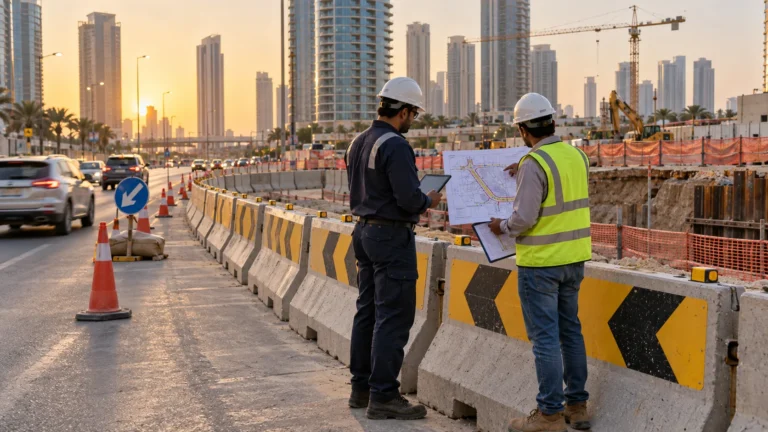
A contractor in Sharjah Industrial Area 10 bought 180 used 3m barriers from a site that was closing in Ajman. AED 220 a unit, cash, collect yourself. Good price. He put 60 of them on an RTA service road diversion in Al Nahda. The inspector walked the line, found four units with exposed rebar at the loops and two with a crack through the base, and failed the whole run. He hired 60 new units at a day rate while the paperwork was sorted and ended up paying more than if he had bought new.
Used barriers are a good buy for the right job. They are a terrible buy for the wrong one, and the difference is fifteen minutes with a tape, a hammer and a torch. Here is how we grade them when we take stock back from clients, and what we tell buyers who ask us to check a lot before they pay.
What “Used” and “Refurbished” Mean in the UAE Market
Nobody regulates these words. In practice you meet four grades.
| Grade | What it is | Typical price vs new 3m jersey | Where it is accepted |
|---|---|---|---|
| Lightly used | One project, under 12 months, intact loops and inserts, surface scuffs | 70 to 80 percent | Anywhere new is accepted, with documents |
| Refurbished | Older stock, chips patched with repair mortar, repainted, reflectors replaced | 55 to 70 percent | Site perimeters, low-speed roads, most municipality works, RTA with inspection |
| Used as-is | Sold off a closing site, no repairs, no paperwork | 35 to 55 percent | Inside plots, laydown yards, non-road use |
| Scrap grade | Cracked, spalled, exposed steel, broken loops | Under 35 percent | Nowhere a vehicle can hit it. Ballast only |
Against a new 3m jersey at AED 350 to 650, that puts lightly used at roughly AED 280 to 500, refurbished at AED 200 to 450, and as-is at AED 150 to 350. Prices quoted around Sharjah and Ajman run lower than Dubai because the sites closing there are smaller and the sellers want the yard cleared.
The 12-Point Inspection
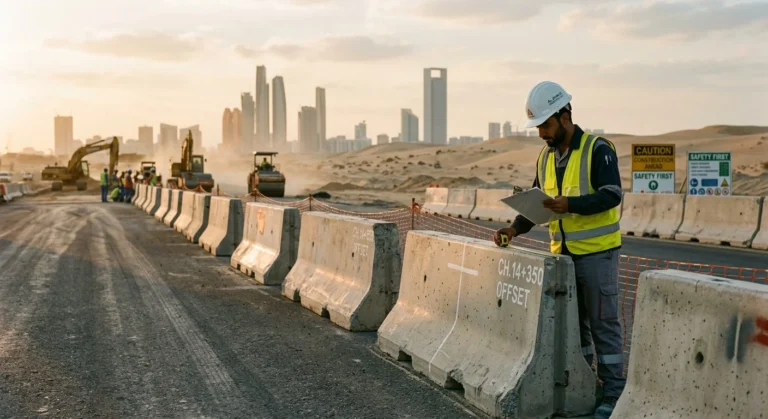
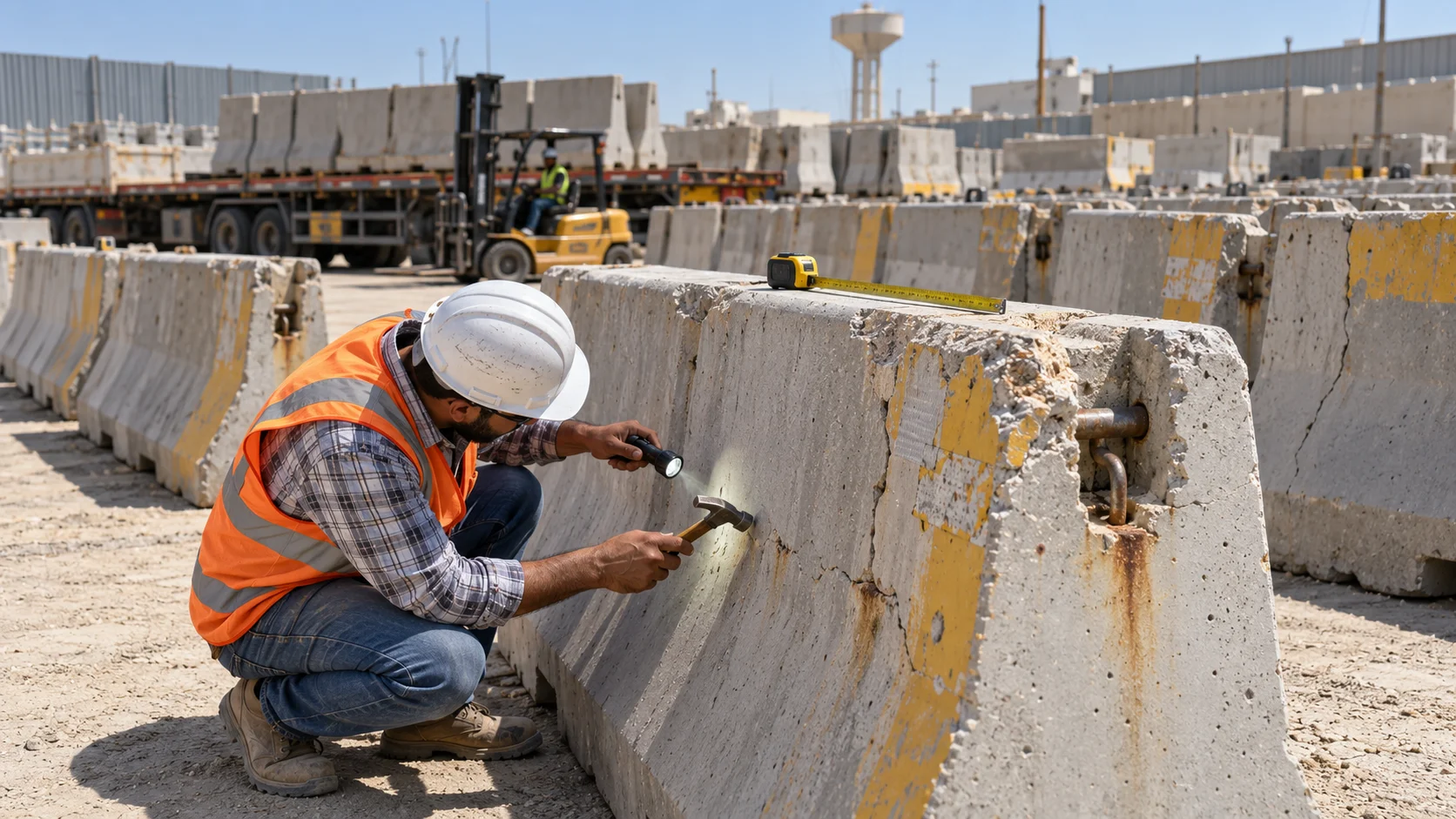
Do this on a sample of at least 10 percent of the lot, chosen by you, not the seller. Bring a 5m tape, a 1kg hammer, a torch, a straight edge and a phone camera.
1. Cracks through the base Lie down and look along the base. A hairline crack across the full base width is a structural failure, not cosmetic. Reject the unit. Shrinkage crazing on the surface that does not cross an edge is fine.
2. Cracks at the loops or inserts The pin and loop ends take the load in a crash and in every lift. Radial cracks around the loop or around a lifting insert mean the anchorage has pulled. Reject.
3. Exposed reinforcement anywhere Rust stains that bleed from a chip mean steel is exposed or within a few millimetres of air. In Gulf humidity that steel is already corroding. A single exposed bar is a reject for road use. It may still serve inside a plot.
4. Spalled edges Chips at the top edge up to 50mm across and 20mm deep are normal handling damage and can be patched. Spalls at the base kerb that remove the sloped profile change how a tyre meets the barrier. Reject for road use.
5. Hammer test Tap the faces at 500mm spacing. A clear ring is sound concrete. A dull thud means delamination, a void or a patch over a void. Mark and reject.
6. Lifting inserts Both inserts present, threads clean, no cracks around them. Screw in a lifting eye. If it does not seat fully, the insert is damaged or filled with grout. A barrier you cannot lift safely is a barrier you cannot place.
7. Connection hardware Loops straight, not bent. Pins present or available. For interlocking types, the tongue intact and the groove not chipped. Mismatched connection types in one lot are a common trick: 100 units that cannot connect to each other are 100 individual blocks.
8. Straightness Straight edge along the top. A bow over 10mm in 3m means the unit was cast badly or stored on two points. Bowed units leave gaps in a run that RTA measures.
9. Height and length consistency Measure five units. A lot mixed from two sources will have 810mm and 1,000mm units together. They will not align, the reflector strip will step, and the inspector will notice before you do.
10. Weight sanity Ask for the weight. A 3m jersey at 810mm should be 1,200kg or more (see the dimensions and weight card). A unit sold as 3m jersey at 850kg is either hollow, lightweight or under-reinforced. Ask what is inside.
11. Repair quality on refurbished units Patches should be the same colour as the parent concrete after a few weeks, flush, and ring solid under the hammer. Patches that are proud, a different grey, or sound dull were done with sand-cement by a labourer in an afternoon.
12. Paperwork Best case: original delivery notes with the casting yard, mix design and cube results. Realistic case: the seller knows which yard cast them and the yard will confirm the mix. Worst case: nothing. No paperwork means no RTA or Abu Dhabi Mobility inspection pass without a load of arguments.
Where Used Barriers Are Accepted, and Where They Are Not
Accepted without much fuss
- Site perimeters and hoarding lines inside the plot
- Laydown yards and material storage
- Car park separation and wheel stops
- Event and crowd control on private land
- Municipality works on roads under 60 km/h, with inspection
Accepted with documents and inspection
- RTA diversions on service roads and internal roads
- Abu Dhabi Mobility city road detours
- DEWA and ADDC substation protection
Not accepted in practice
- E11, E311, E611 and any 100 km/h plus highway work
- Anti-ram and HVM lines for SIRA or DCD. These require certified units with a known cage and test certificate, used stock has neither
- Any specification that calls for crash-tested EN 1317 or MASH containment with a certificate per batch
Our rule: if the barrier can be hit by a vehicle doing over 60 km/h, buy new or rent certified. If it protects a trench, a hoarding or a pile of blocks, used is fine.
Transport Is the Hidden Cost
Used barriers are usually “collect from site.” Price the collection properly.
- A 40ft trailer takes 6 to 7 units of 3m. 180 units is 27 loads.
- Dubai to Sharjah short haul runs AED 350 to 550 a load. 27 loads is AED 9,500 to 15,000.
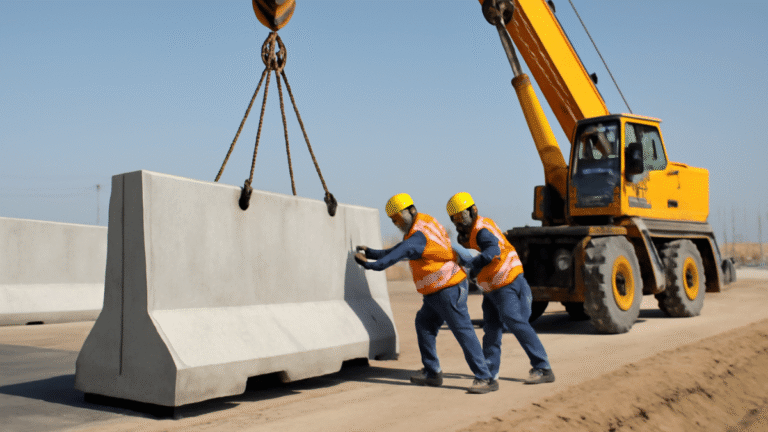
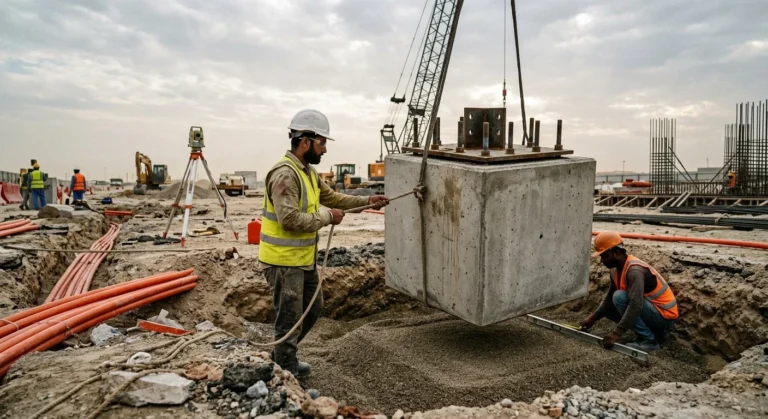
- The seller’s site rarely has a crane. You bring one, at AED 1,800 to 2,800 a shift, loading 40 to 60 units a shift.
- Then you need a crane at your end.
On that Sharjah example, AED 220 a unit became AED 220 plus roughly AED 75 transport plus AED 45 craneage both ends. AED 340 landed. New stock delivered with offload would have been AED 420 to 480. A saving, but a third of what it looked like.
Now add the Dubai truck restrictions that started on 1 October 2026 and the Abu Dhabi heavy vehicle windows. Collection timing is no longer flexible. Our Dubai truck ban delivery guide covers the routes.
The Buyback Alternative
Most contractors buying used are solving one problem: they do not want to own 200 barriers after the job. There are two cleaner answers.
- Buyback: buy new from the yard with an agreed buyback price at project end, typically 40 to 60 percent of purchase depending on duration and condition. You get new, inspected, documented stock for the inspector and a known exit.
- Rental: for anything under about 25 days, rent. The maths is in our rental vs buying guide.
Both avoid the inspection lottery.
Checklist Before You Pay for a Used Lot
- Inspect 10 percent minimum, your pick, 12 points above.
- Reject rate above 15 percent on the sample: walk away or reprice the whole lot as scrap grade.
- Confirm one connection type and one height across the lot.
- Get the casting yard name and call them.
- Get a weight on at least one unit.
- Price collection: trailer loads plus two cranes.
- Match the lot to the job. Road work over 60 km/h: do not buy used.
- Agree in writing that rejected units at your yard go back at the seller’s cost. Few sellers will. The ones who do are the ones to buy from.
FAQs
How much are used jersey barriers in the UAE?
Roughly AED 150 to 500 per 3m unit depending on grade, against AED 350 to 650 new. Add AED 100 to 150 a unit for collection and craneage if the seller is not delivering.
Will RTA accept used concrete barriers?
On service roads and internal roads, yes, if they match the approved TMP, are connected, carry Class 2 reflectors, have no exposed steel or structural cracks, and the mix can be evidenced. On highways, expect to be asked for certificates that used stock will not have.
How long does a precast barrier last?
A well-cast C40/50 barrier stored and handled properly lasts 20 years plus in the UAE. Most barriers die from handling, not age: dropped off trailers, dragged by chain, stacked three high without timber. Our handling guide shows what kills them.
Can refurbished barriers be repainted and reflectored to pass inspection?
Reflectors and paint are cosmetic and easy. They do not fix cracks, exposed steel or damaged inserts. An inspector who sees fresh paint over a rust stain will look harder, not less.
Is it better to buy used or rent for a 3-month job?
Rent for anything under about 4 weeks, buy with buyback for 3 months plus. Used sits in the middle and only wins if the job is off-road and you can collect cheaply.
Want a Lot Checked Before You Buy?
Send photos of 10 units, the seller’s location and the job they are for. We tell you the grade, a fair price and whether the job will accept them, free within 2 hours. If the answer is no, we quote new with buyback so you can compare. WhatsApp +971 58 660 9400.