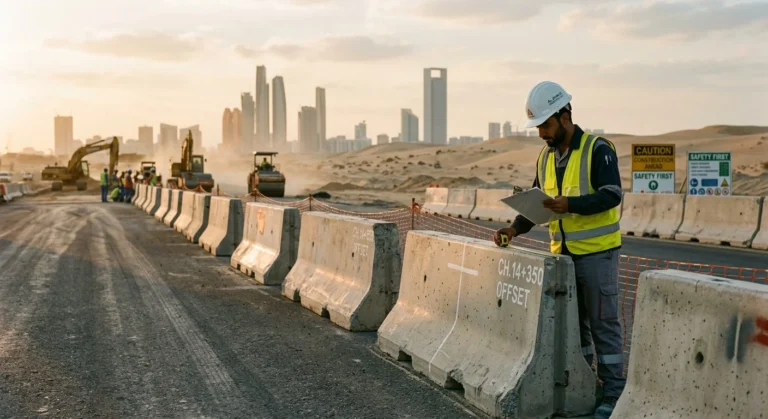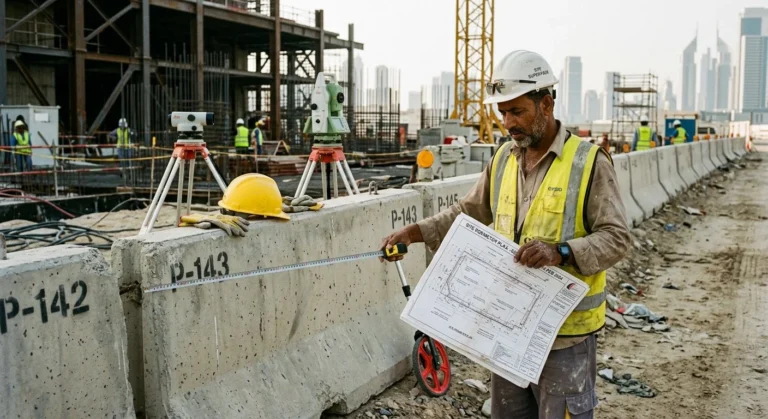
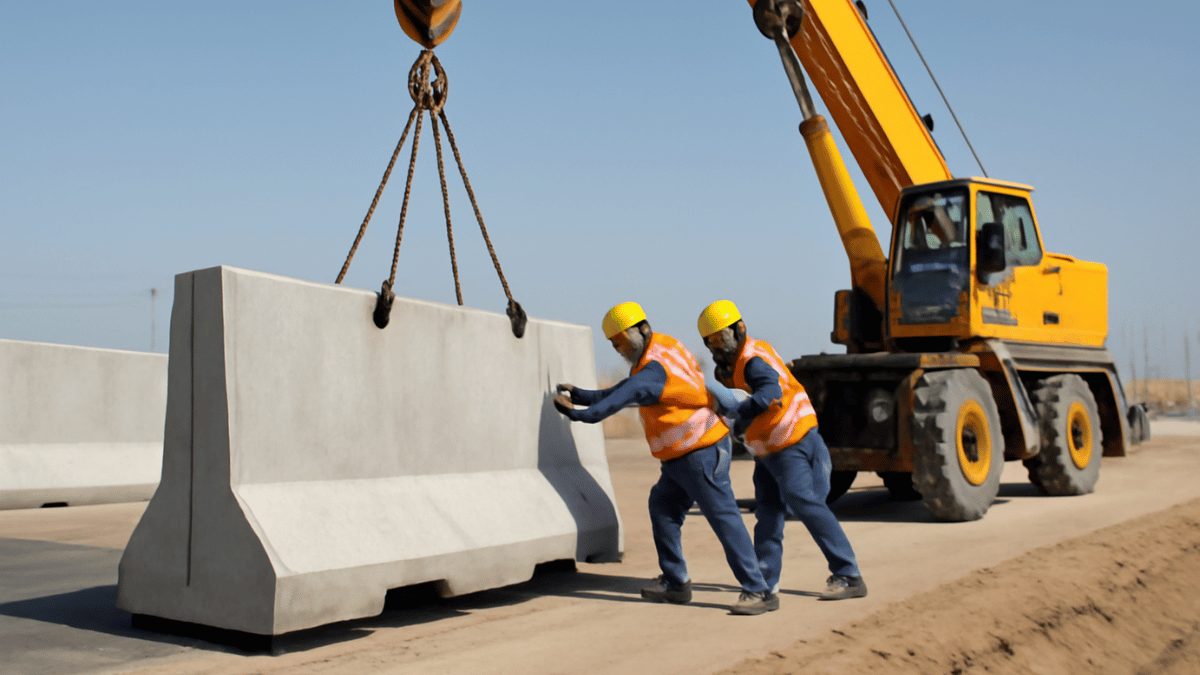
What Are Precast Concrete Barriers? Types, Uses, Prices & Benefits in UAE (2026 Guide)
In the UAE’s booming infrastructure sector, precast concrete barriers have become the go-to safety solution for highways, construction sites, events, and perimeter security. But what exactly are they? How much do they cost? And which type should you choose?
This comprehensive guide answers every question contractors, engineers, and project managers ask about precast concrete barriers in the UAE — including types, specifications, pricing, regulations, and where to buy them.
Quick Answer: Precast concrete barriers are factory-manufactured reinforced concrete structures used for road safety, traffic management, and site security. They are cast off-site under controlled conditions, delivered ready to install, and last decades with virtually zero maintenance. At Arab Precast, barriers start from AED 250–850 per unit depending on type and size.
What Are Precast Concrete Barriers?
Precast concrete barriers are heavy-duty concrete structures that are manufactured in a factory, cured under controlled conditions, and transported to the project site ready for immediate installation.
Unlike traditional cast-in-place barriers (which are poured and formed on-site), precast barriers are:
- Factory-produced in standardized molds for consistent quality
- Reinforced with steel for impact resistance and durability
- Delivered ready to install — no curing time required on-site
- Reusable and relocatable — ideal for temporary and permanent applications
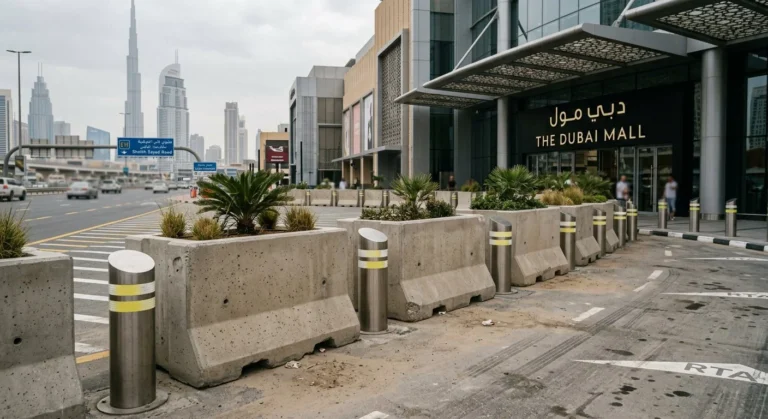
In the UAE, where construction timelines are aggressive and quality standards are strict, precast concrete barriers are the preferred choice for road safety, construction zones, and security perimeters across Dubai, Abu Dhabi, Sharjah, Ajman, Ras Al Khaimah, Fujairah, and Umm Al Quwain.
How Precast Concrete Barriers Are Made
The manufacturing process for precast concrete barriers involves four key stages:
| Stage | Process | Quality Control |
|---|---|---|
| 1. Molding | Concrete is poured into precision-engineered steel molds shaped to RTA/DMT specifications | Dimensional tolerance ±2mm |
| 2. Reinforcement | Steel rebar cages are placed inside the mold before pouring | Grade 60 steel, tested for tensile strength |
| 3. Casting & Curing | High-strength concrete (Grade 40+) is poured and cured in climate-controlled conditions | Compressive strength tested at 7, 14, and 28 days |
| 4. Finishing & Transport | Barriers are demolded, inspected, painted/marked (if required), and loaded for delivery | Visual inspection, batch ID tagging, weight verification |
At Arab Precast, every barrier batch comes with certified compressive strength reports, mix design documentation, and quality assurance certificates — all ready for municipality submission.
Types of Precast Concrete Barriers in the UAE
Not all concrete barriers are the same. Here’s a breakdown of the most common types we supply across UAE projects — and you can view the full specifications for each on our precast concrete products page.
1. Jersey Barriers (Standard)
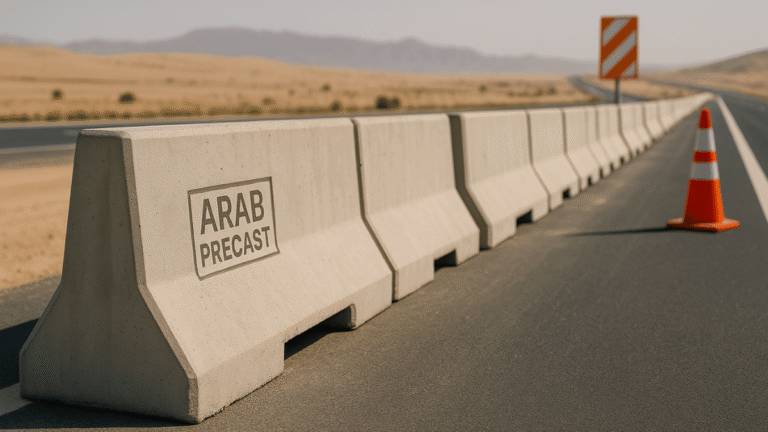
The most widely used concrete barrier in the UAE. Named after their origin in New Jersey, USA, these barriers feature a distinctive sloped design that redirects vehicles back onto the road during an impact.
| Specification | Value |
|---|---|
| Height | 800–1000 mm |
| Base Width | 450–600 mm |
| Length | 2–4 meters |
| Weight | 800–2,500 kg per unit |
| Concrete Grade | C40–C50 |
| Best For | Highway lane dividers, road edges |
Price in UAE: AED 350–650 per unit (depending on size)
2. F-Type Barriers
An improved version of the Jersey barrier with a steeper lower slope that reduces vehicle climbing during impact. Mandatory on many UAE highways per RTA specifications.
| Specification | Value |
|---|---|
| Height | 1000–1200 mm |
| Base Width | 600–800 mm |
| Length | 3–4 meters |
| Weight | 1,500–3,000 kg per unit |
| Best For | High-speed highways, expressways, median barriers |
Price in UAE: AED 500–850 per unit
3. Single-Side Concrete Barriers
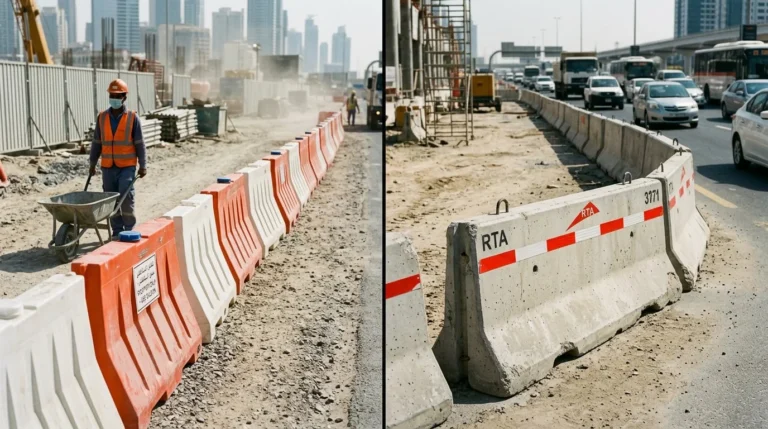
Designed to protect from one direction only, these barriers are lighter and easier to install. Common in construction zones and temporary roadworks.
| Specification | Value |
|---|---|
| Height | 800–1000 mm |
| Base Width | 400–600 mm |
| Length | 2–3 meters |
| Best For | Roadside protection, construction site boundaries, temporary installations |
Price in UAE: AED 250–500 per unit
4. Double-Side Concrete Barriers
Symmetrical barriers that provide equal protection from both sides. The standard choice for highway medians and divided roads.
| Specification | Value |
|---|---|
| Height | 800–1500 mm |
| Base Width | 600–1000 mm |
| Length | 2–4 meters |
| Best For | Highway medians, permanent road dividers, high-traffic zones |
Price in UAE: AED 400–900 per unit
5. Interlocking Concrete Barriers
These barriers feature built-in connectors that lock adjacent units together, creating a continuous, unbroken barrier line. Ideal for high-security applications.
| Specification | Value |
|---|---|
| Height | 800–1200 mm |
| Connection Type | Male-female interlock system |
| Length | 2–3 meters |
| Best For | Perimeter security, anti-ram protection, continuous barrier runs |
Price in UAE: AED 450–800 per unit
6. Temporary / Movable Barriers
Lighter precast units designed for short-term deployment. Can be repositioned as project needs change.
| Specification | Value |
|---|---|
| Height | 600–900 mm |
| Weight | 400–800 kg per unit |
| Handling | Forklift pockets or lifting hooks |
| Best For | Events, short-term construction, traffic diversion |
Price in UAE: AED 250–450 per unit (purchase) / AED 15–35 per day (rental)
Complete Comparison Table: Precast Concrete Barrier Types in UAE
| Feature | Jersey Barrier | F-Type Barrier | Single-Side | Double-Side | Interlocking | Temporary |
|---|---|---|---|---|---|---|
| Impact Protection | One side | Both sides | One side | Both sides | Both sides | Moderate |
| Vehicle Redirection | Excellent | Superior | Good | Excellent | Excellent | Good |
| Installation Speed | Fast | Fast | Very Fast | Fast | Fast | Very Fast |
| Reusability | High | High | Very High | High | Medium | Very High |
| RTA Approved | ✅ Yes | ✅ Yes | ✅ Yes | ✅ Yes | ✅ Yes | ✅ Yes |
| Best Application | Highway edges | Expressways | Roadside, construction | Medians | Security perimeters | Events, temp works |
| Price Range (AED) | 350–650 | 500–850 | 250–500 | 400–900 | 450–800 | 250–450 |
Why Precast Concrete Barriers Are Essential in the UAE
The UAE’s unique environment and rapid development make precast concrete barriers particularly valuable. Here’s why:
1. Built for Extreme Weather
The UAE’s climate — with summer temperatures exceeding 50°C, high humidity in coastal areas, and occasional heavy rain/floods — demands construction materials that can withstand harsh conditions. Precast concrete barriers:
- Resist thermal expansion and contraction better than poured-in-place concrete
- Don’t warp, crack, or degrade under UV exposure
- Maintain structural integrity in salt-laden coastal environments (Dubai Marina, Abu Dhabi Corniche, Sharjah waterfront)
- Perform consistently across all 7 Emirates
2. Speed of Installation
In a region where construction timelines are aggressive, the ability to deploy barriers immediately upon delivery is critical:
- No on-site curing time (unlike cast-in-place barriers that need 7–28 days to cure)
- Ready for traffic within hours of installation
- Ideal for emergency road closures and urgent safety requirements
- Reduces project delays and contractor liability
3. Cost-Effective Over the Project Lifecycle
While precast barriers may have a slightly higher upfront cost than alternatives, the total cost of ownership is significantly lower:
| Cost Factor | Precast Barriers | Cast-in-Place Barriers |
|---|---|---|
| Initial material cost | Medium | Low |
| Installation labor | Low | High |
| Curing time | None | 7–28 days |
| Maintenance over 10 years | Minimal | Moderate to High |
| Reusability | Yes — 3–5 deployments | No — permanent |
| Total cost over 10 years | 30–40% lower | Baseline |
4. Municipality Compliance
All Arab Precast concrete barriers meet or exceed:
- Dubai RTA road safety specifications
- Abu Dhabi DMT (Department of Municipalities and Transport) standards
- Sharjah, Ajman, and other emirate municipal requirements
- International impact safety standards (AASHTO, BS EN 1317)
We provide complete documentation packages including engineering drawings, mix design certificates, compressive strength test reports, and batch IDs — ready for authority submission.
Common Applications of Precast Concrete Barriers in the UAE
Precast concrete barriers are used across a wide range of projects in the UAE. If you want a deeper dive into every application — from highway safety to flood protection — check out our full guide on the top uses of precast concrete barriers in the UAE.
Here are the most common ways contractors and developers use them:
🛣️ Highway & Road Safety
The #1 use of precast concrete barriers in the UAE:
- Lane separation on Sheikh Zayed Road, E311, E611, and other major highways
- Median barriers on divided roads
- Edge protection on elevated roads and bridges
- Work zone safety during road construction and maintenance
🏗️ Construction Site Protection
Every major construction project in the UAE requires perimeter barriers:
- Securing active construction sites in Dubai, Abu Dhabi, Sharjah
- Protecting workers and pedestrians from vehicle hazards
- Preventing unauthorized access to dangerous areas
- Compliance with municipal construction site safety regulations
🚧 Traffic Management & Diversion
Precast barriers are the fastest way to reroute traffic:
- Lane closures during infrastructure upgrades
- Emergency detours for utility work
- Event traffic management (Dubai Shopping Festival, F1 Abu Dhabi, Expo-related events)
- Temporary road closures for maintenance
🔒 Perimeter & Anti-Ram Security
High-security facilities across the UAE rely on precast barriers:
- Government buildings and ministries
- Airports (DXB, AUH, DWC) and seaports
- Military installations and embassies
- Oil & gas facilities (ADNOC sites)
- Data centers and logistics hubs
🌊 Flood & Drainage Protection
A growing application in the UAE after recent flood events:
- Temporary flood walls in vulnerable areas
- Stormwater diversion channels
- Erosion control along wadis and drainage paths
- Protection of underground utilities
Precast Concrete Barriers vs. Cast-in-Place: Which Should You Choose?
This is one of the most common questions we get from contractors in the UAE. Here’s the honest comparison:
| Factor | Precast Barriers | Cast-in-Place Barriers |
|---|---|---|
| Manufacturing | Factory-controlled environment | On-site, weather-dependent |
| Quality Consistency | Uniform, tested every batch | Variable, depends on crew skill |
| Installation Speed | Hours — deliver and place | Days to weeks — pour, cure, strip |
| Weather Impact | None — manufactured indoors | High — rain, heat, humidity affect curing |
| Customization | Standard sizes + custom orders | Fully customizable on-site |
| Reusability | Yes — move and reuse | No — permanent structure |
| Total Cost | Lower over project lifecycle | Higher due to labor and delays |
| Municipality Approval | Pre-approved designs available | Requires individual engineering approval |
Our recommendation: For 90% of UAE projects, precast concrete barriers are the better choice. We’ve covered this topic in detail in our guide on precast vs cast-in-place concrete barriers, where we break down cost, installation time, durability, and which method suits different project types.
Precast Concrete Barrier Specifications for UAE Projects
Here are the standard specifications that Arab Precast manufactures to:
| Specification | Standard | Custom Available |
|---|---|---|
| Concrete Compressive Strength | 40 MPa (C40) minimum | Up to 60 MPa (C60) |
| Steel Reinforcement | Grade 60 rebar, 10–16mm diameter | Per structural engineer’s design |
| Standard Lengths | 2m, 3m, 4m | Custom lengths up to 6m |
| Standard Heights | 800mm, 1000mm, 1200mm | Up to 1500mm |
| Base Width | 450–1000mm (varies by type) | Per project requirements |
| Weight per Unit | 800–3,000 kg | Per dimensions |
| Surface Finish | Smooth form-finish | Painted, reflective strips, markings |
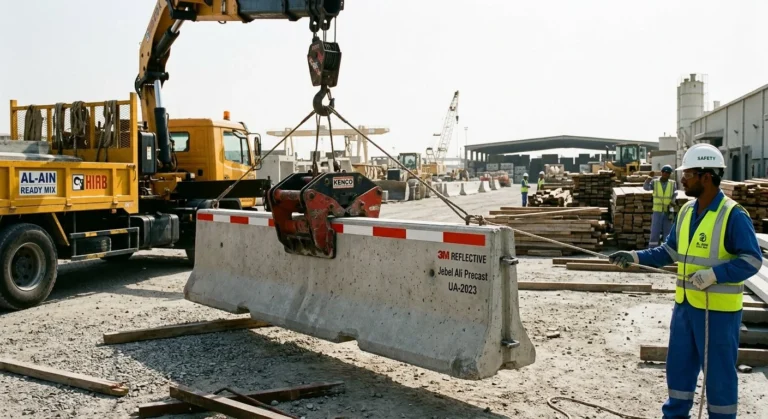
| Lifting Points | Built-in hooks or forklift pockets | Per handling equipment |
All specifications comply with Dubai RTA, Abu Dhabi DMT, and UAE.S 501 standards.
FAQ — What Are Precast Concrete Barriers?
What is the difference between precast and cast-in-place concrete barriers?
Precast concrete barriers are manufactured in a factory under controlled conditions and delivered ready to install. Cast-in-place barriers are poured and formed on-site, requiring 7–28 days to cure. Precast barriers offer faster installation, better quality consistency, and reusability.
How much do precast concrete barriers cost in the UAE?
Prices vary by type, size, and quantity. Standard Jersey barriers range from AED 350–650 per unit, F-Type barriers from AED 500–850, and single-side barriers from AED 250–500. Bulk orders and long-term contracts receive discounted pricing. Get a quote →
What is the standard size of concrete barriers in the UAE?
The most common concrete barrier sizes in the UAE are:
Length: 2 meters, 3 meters, or 4 meters
Height: 800mm, 1000mm, or 1200mm
Base width: 450mm–1000mm depending on barrier type
Are precast concrete barriers RTA approved?
Yes. Arab Precast’s standard barrier designs are pre-approved by Dubai RTA and comply with Abu Dhabi DMT requirements. We provide all necessary documentation including engineering drawings, test certificates, and mix design reports for authority submission.
Can precast concrete barriers be reused or relocated?
Yes. One of the biggest advantages of precast barriers is that they can be lifted, transported, and reinstalled at new locations. Many of our clients reuse barriers across multiple projects, significantly reducing their total cost.
How long do precast concrete barriers last?
Precast concrete barriers have a design life of 30–50 years with minimal maintenance. They are resistant to UV exposure, extreme temperatures, moisture, and chemical degradation — making them ideal for the UAE’s harsh climate.
Do you deliver precast concrete barriers across all Emirates?
Yes. We deliver to all 7 Emirates — Dubai, Abu Dhabi, Sharjah, Ajman, Ras Al Khaimah, Fujairah, and Umm Al Quwain. Delivery is typically within 2–5 business days depending on quantity and location.
Why Choose Arab Precast for Your Concrete Barriers?
At Arab Precast, we don’t just manufacture barriers — we engineer safety solutions for the UAE’s most demanding projects:
- ✅ 10+ years of manufacturing experience
- ✅ 500+ clients served across all 7 Emirates
- ✅ RTA & DMT approved standard designs
- ✅ Grade 40+ concrete with full certification
- ✅ 2–5 day delivery across the UAE
- ✅ Custom sizes and designs available
- ✅ Rental and purchase options
- ✅ Professional installation services
- ✅ 200+ skilled professionals in our team
- ✅ 95% client satisfaction rating
Whether you need 10 barriers for a construction site or 10,000 for a highway project, we deliver on time, on spec, on budget.
Choosing the right barrier for your project can be tricky — different applications require different specifications, and the wrong choice can lead to municipality rejections or safety issues. We’ve put together a complete guide on how to choose the right precast barrier for your UAE project to help you avoid costly mistakes.
And if you need to navigate municipality approvals in Dubai or Abu Dhabi, check out our breakdown of RTA and DMT concrete barrier regulations — we cover exact specifications, required documents, and common reasons for rejection.
Ready to explore our full product range? Browse all our precast concrete products — from barriers and pole foundations to trench covers and signage blocks.
📞 Call us: +971 58 660 9400
📧 Email: info@arabprecast.ae
💬 WhatsApp: Chat with our team