
How to Choose the Right Precast Barrier for Your Project in the UAE (2026 Decision Guide)
Choosing the right type of precast concrete barrier for your project in the UAE might seem straightforward — but with so many variations in size, strength, application, and regulation, making the wrong choice can lead to project delays, safety issues, municipality rejections, or unnecessary costs.
Whether you’re overseeing a highway expansion, managing a construction site, or looking for perimeter protection, this guide will walk you through every decision factor — from barrier type and size to pricing, compliance, and delivery logistics.
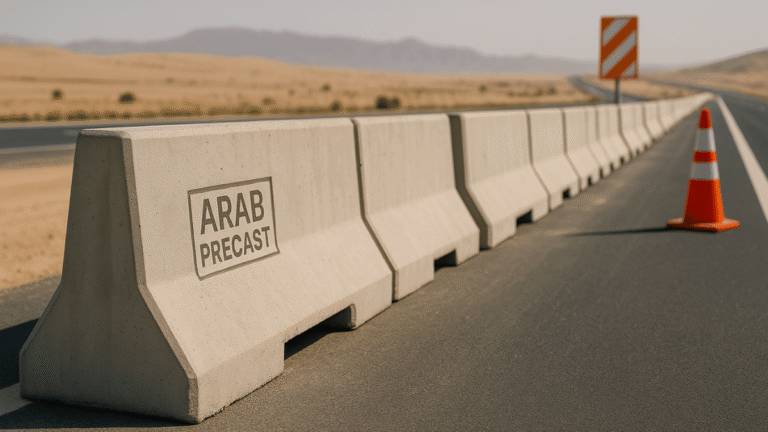
Quick Answer: Start by identifying your application (highway, construction, security, or temporary). Then choose the barrier type that matches: Jersey barriers for road edges, F-Type for expressways, interlocking for security perimeters, and portable single-side for temporary zones. Standard highway barriers are 3–4 meters long and 1000mm high, costing AED 350–850 per unit. All Arab Precast barriers are RTA and DMT pre-approved.
Why Barrier Selection Matters
Let’s be clear: not all barriers are the same.
- A barrier designed for lane separation on a busy highway is very different from one used to secure a construction site.
- Barriers used in government zones or ports need higher security ratings and anti-ram specifications.
- Choosing the wrong type can result in non-compliance, safety risks, or even rejection by UAE municipalities.
- Overspecifying wastes budget — underspecifying creates liability.
At Arab Precast, we’ve helped hundreds of engineers, project managers, and procurement heads get the specs right from the beginning. This guide distills everything we’ve learned into a simple decision framework you can use for any project.
Step 1: Identify Your Application
The first and most critical decision is what the barrier is meant to do. Different applications have different requirements for strength, height, visibility, and compliance.
| Application | Recommended Barrier Type | Key Requirements |
|---|---|---|
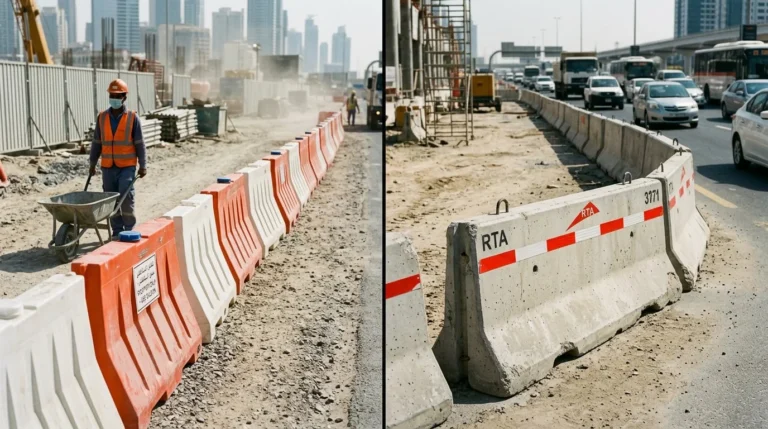
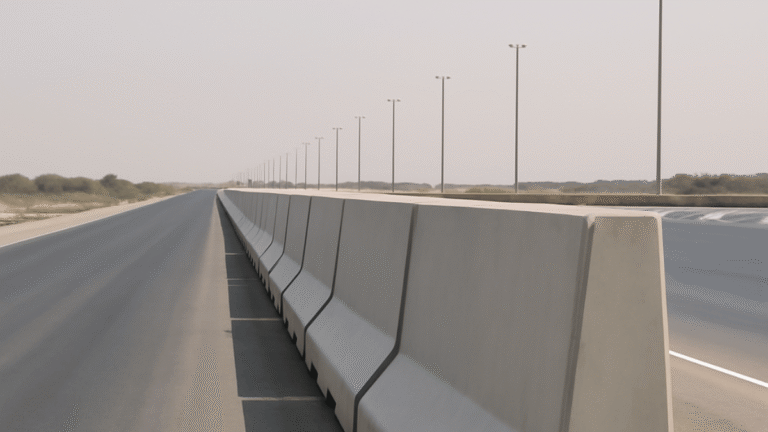
| Highway lane separation | F-Type or Jersey barrier (1000–1067mm height) | RTA compliance, reflective markings, impact-grade reinforcement |
| Road edge protection | Single-side Jersey barrier (800mm height) | One-directional impact resistance, standard finish |
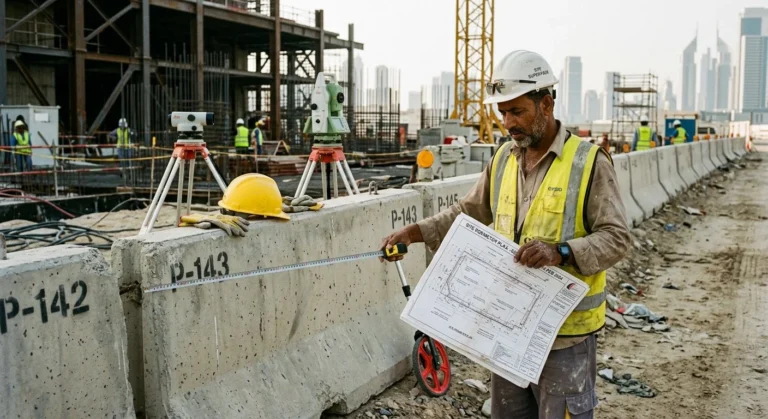
| Construction site perimeter | Portable single-side or double-side barriers (800–1000mm) | Easy relocation, forklift-compatible, visible markings |
| Traffic diversion / events | Temporary modular barriers (600–800mm height) | Lightweight, quick deployment/removal, rental-friendly |
| Anti-ram security | Reinforced interlocking barriers (1200–1500mm) | Heavy-duty steel reinforcement, wider base, blast-rated design |
| Flood or drainage control | Heavy-duty flat-top barriers (800–1200mm) | Water-resistant, stackable, interlock system |
| Median dividers on divided roads | Double-side barriers (1000mm height) | Symmetrical impact protection, interlocking connectors |
Tip: Not sure which application category your project falls into? Read our detailed guide on the top uses of precast concrete barriers in the UAE to see real-world examples from highways, construction sites, and security installations across the Emirates.
Step 2: Choose the Right Size and Shape
Once you know the application, the next decision is dimensions. Size affects stability, transportability, and cost.
Standard Sizes Available in the UAE
| Length | Height | Base Width | Weight (approx.) | Best For |
|---|---|---|---|---|
| 1.5m | 600–800mm | 400–500mm | 300–500 kg | Temporary events, tight spaces, pedestrian zones |
| 2m | 600–1000mm | 400–600mm | 500–900 kg | Small construction sites, roadside work zones |
| 3m | 800–1200mm | 600–800mm | 900–1,800 kg | Standard highway barriers, median dividers |
| 4m | 1000–1500mm | 800–1000mm | 1,800–3,500 kg | High-speed expressways, anti-ram security |
At Arab Precast, we offer barrier heights from 800mm up to 1500mm, with base widths of 600–1000mm. Custom molds are available for unique project requirements — typically with a 2–4 week lead time.
Size Selection Rules of Thumb
| Project Type | Minimum Height | Minimum Length | Why |
|---|---|---|---|
| Pedestrian safety | 600mm | 1.5m | Visible deterrent without blocking sightlines |
| Construction site | 800mm | 2m | Standard safety requirement, easy to reposition |
| Road edge | 800–1000mm | 2–3m | Vehicle deflection at moderate speeds |
| Highway median | 1000–1067mm | 3–4m | RTA minimum for high-speed roads |
| Anti-ram security | 1200mm+ | 3–4m | Stop vehicles at 50+ km/h |
| Flood defense | 800–1200mm | 2–3m | Block water flow, stackable for height |
Step 3: Check Reinforcement and Load Ratings
For heavy-duty applications, your barrier will need steel reinforcement and a certified compressive strength. This is where many contractors make costly mistakes — underspecifying the barrier and failing municipality inspections.
Ask These Questions Before Ordering:
1. Does the barrier need to withstand vehicle impact?
- Yes → Use Grade 60 steel reinforcement with C40+ concrete
- No (pedestrian only) → Standard reinforcement may suffice
2. Is it being installed in a high-risk security area?
- Yes → Specify heavy-duty rebar (16mm+) and anti-ram rated design
- No → Standard specifications are adequate
3. Will it be placed in a coastal or marine zone?
- Yes → Request anti-corrosion treatment and salt-resistant concrete mix
- No → Standard mix is fine
4. What is the expected traffic speed near the barrier?
- 80+ km/h → F-Type barrier (mandatory on many UAE highways)
- 40–80 km/h → Jersey barrier (standard)
- Under 40 km/h → Single-side barrier (lighter option)
Tip: All Arab Precast barriers are made using Grade 40 concrete (or higher) and can be reinforced based on load and security specs. Every batch comes with certified compressive strength test reports ready for municipality submission.
Need a deeper technical comparison of materials and methods? Our guide on precast vs cast-in-place concrete barriers breaks down quality, durability, and cost differences in detail.
Step 4: Ensure Municipality Compliance
Each emirate in the UAE has its own safety and road infrastructure rules. A barrier that works in Abu Dhabi might need adjustments for use in Dubai, Sharjah, or Fujairah. Getting this wrong can result in fines, forced removal, or project delays.
Dubai — RTA & DM Requirements
| Spec | Requirement |
|---|---|
| Authority | Roads and Transport Authority (RTA) + Dubai Municipality (DM) |
| Minimum height | 800mm for roadside, 1000mm for highways |
| Concrete grade | C40 minimum |
| Surface finish | Smooth, painted (white/yellow/black) for visibility |
| Reflectors | Mandatory for barriers near roadways |
| Interlocking | Required for long-span installations |
| Documentation | Engineering drawings + compressive strength test reports |
Abu Dhabi — DMT Requirements
| Spec | Requirement |
|---|---|
| Authority | Department of Municipalities and Transport (DMT) |
| Barrier types | Jersey, F-Type, interlocking, bin blocks |
| Concrete grade | C40 minimum reinforced concrete |
| Surface finish | Clean finish, no visible cracks |
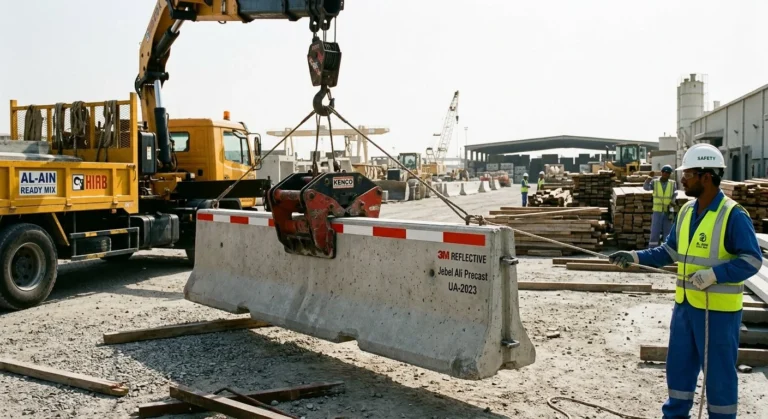
| Mobility | Crane-compatible or forklift-compatible |
| Identification | Supplier mark + batch ID on each unit |
| Documentation | Load tests, mix design approvals, QA reports |
Sharjah, Ajman, RAK, Fujairah & Umm Al Quwain
Each of these emirates has its own municipal authority with similar but not identical requirements. In general:
- Sharjah: Follows RTA-style specifications with additional aesthetic requirements in urban areas
- Ajman: Accepts RTA-approved designs with local registration
- Ras Al Khaimah: Similar to Abu Dhabi DMT standards
- Fujairah: Focus on coastal-grade concrete due to salt exposure
- Umm Al Quwain: Standard RTA-compliant designs accepted
All Arab Precast standard barrier designs are pre-approved for road use in major UAE municipalities. We provide spec sheets, engineering drawings, and compliance documentation for review and approval — saving you 1–2 weeks in the submission process.
For the complete regulatory breakdown, read our detailed guide on municipality regulations for concrete barriers in Dubai and Abu Dhabi.
Step 5: Consider Delivery and Handling
Larger barriers are more stable — but also harder to transport and install. Many projects fail not because of the wrong barrier choice, but because of poor logistics planning.
Key Delivery Questions:
1. Does the site have access for a boom crane or forklift?
- If no → Choose lighter barriers (under 1,000 kg) that can be manually positioned
- If yes → Standard 2–4m barriers are fine
2. How far are the delivery points from road access?
- Over 200m from road → Specify forklift recesses on barriers for easier handling
- Tight urban site → Choose 2m barriers instead of 3m or 4m for maneuverability
3. Do you need stackable barriers for storage efficiency?
- Yes → Specify flat-top barriers with stacking lugs — saves up to 60% of yard space
- No → Standard profiles work fine
Arab Precast Delivery Capabilities:
| Service | Details |
|---|---|
| On-site delivery | All 7 Emirates — Dubai, Abu Dhabi, Sharjah, Ajman, RAK, Fujairah, Umm Al Quwain |
| Delivery timeline | 2–5 business days for standard orders; 7–10 days for custom molds |
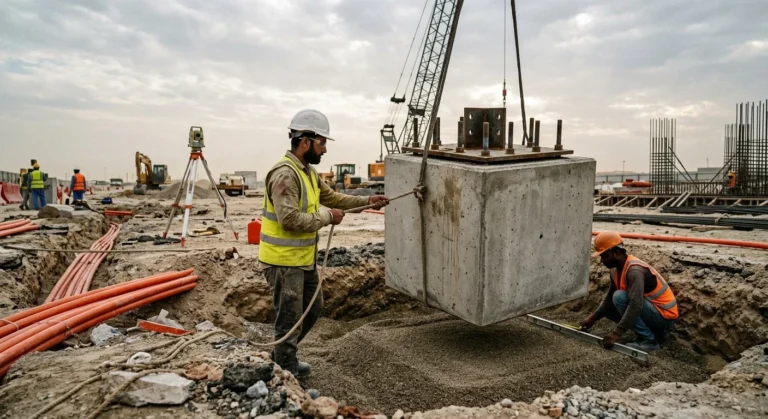
| Handling equipment | Crane-compatible lifting hooks or forklift recesses (specify at order) |
| Unloading | Included in delivery — our trucks have boom cranes for direct placement |
| Bulk orders | Dedicated fleet scheduling for orders of 500+ units |
Pro tip: Many contractors save 20–30% on handling costs by choosing portable, forklift-friendly barrier types with built-in lifting points. Ask our team which barrier profile is easiest to handle for your specific site conditions.
Step 6: Budget — Purchase vs. Rental vs. Buyback
Not all projects require permanent installations. In many cases, renting barriers is a smart financial move — especially for:
- Events (marathons, festivals, exhibitions)
- Temporary road works (utility trenching, lane closures)
- Short-term construction sites (6 months or less)
- Phased projects where barriers need to move between zones
Cost Comparison: Purchase vs. Rental
| Option | Price Range | Best For |
|---|---|---|
| Purchase (standard barriers) | AED 150–1,200 per unit | Permanent installations, multi-project reuse |
| Short-term rental | AED 10–35 per unit per day | Events, emergency closures, 1–4 week projects |
| Long-term rental | AED 120–600 per unit per month | Multi-month construction, phased roadworks |
| Buyback program | 40–60% of purchase price returned | Government projects, mega-developments |
Budget Decision Framework:
| Project Duration | Recommended Option | Why |
|---|---|---|
| Under 1 month | Short-term rental | Cheapest option, no capital expenditure |
| 1–6 months | Long-term rental | Lower monthly cost than short-term rental |
| 6–24 months | Purchase with buyback | Recover 40–60% of cost after project |
| 24+ months | Purchase outright | Lowest total cost, full ownership |
Barrier rentals have grown in popularity by 40% among private contractors in Dubai and Sharjah over the last 2 years, as project managers realize the cost savings of not owning permanent assets for temporary needs.
For detailed pricing across every barrier type, see our complete precast concrete barrier prices in UAE 2026 guide.
Decision Matrix: Quick-Reference Guide
Use this matrix to identify the right barrier for your project in under 2 minutes:
| Your Project | Barrier Type | Height | Length | Purchase Price (AED) | Rental (AED/day) |
|---|---|---|---|---|---|
| Highway median | F-Type | 1067mm | 3–4m | 500–850 | 20–30 |
| Road edge | Jersey | 800mm | 2–3m | 250–450 | 12–20 |
| Construction site | Single-side | 800mm | 2m | 250–400 | 10–18 |
| Event crowd control | Portable | 600mm | 1.5m | 150–250 | 8–15 |
| Anti-ram security | Interlocking reinforced | 1200mm | 3–4m | 600–1,200 | 25–40 |
| Flood defense | Flat-top stackable | 800–1200mm | 2–3m | 350–700 | 15–25 |
| Temporary traffic diversion | Single-side portable | 600–800mm | 2m | 200–350 | 10–18 |
| Parking access control | Low single-side | 600mm | 2m | 150–250 | 8–12 |
Client Example: Choosing the Right Barrier in Ajman
In early 2025, a contractor working on a commercial site in Ajman came to us needing:
- Barriers to secure their open excavation zone
- Compliance with local safety regulations
- Easy relocation during site progression
- Budget-conscious solution for a 6-month project
Our recommendation:
- Portable 3m single-side barriers with forklift recesses
- Built-in reflective strips for night visibility
- Long-term rental (6 months at AED 200/barrier/month)
- On-site delivery with staggered schedule for phased deployment
The result:
- Compliant site with zero injuries
- Smooth inspection approvals from Ajman Municipality
- Total barrier cost: AED 1,200 per unit for 6 months (vs. AED 2,400+ to purchase)
- Barriers redeployed to the next project phase without additional cost
This is a typical scenario — and one where renting saved the contractor over 50% compared to purchasing.
Common Mistakes to Avoid
Based on our experience with hundreds of projects across the UAE, here are the 5 most common mistakes contractors make when choosing barriers:
❌ Mistake 1: Choosing Based on Price Alone
The cheapest barrier isn’t always the most cost-effective. A barrier that fails municipality inspection costs you re-work fees, project delays, and potential fines. Always verify RTA/DMT compliance before ordering.
❌ Mistake 2: Not Planning for Relocation
If your project involves phased work zones, choose barriers with forklift recesses or lifting hooks. Without these, moving barriers requires a crane — adding AED 2,000–5,000 per relocation.
❌ Mistake 3: Underestimating Delivery Lead Times
Standard barriers can be delivered in 2–5 business days. But custom molds take 2–4 weeks to manufacture. If your project has a tight deadline, order standard sizes or plan custom orders well in advance.
❌ Mistake 4: Ignoring Weather Conditions
In the UAE, summer temperatures exceed 50°C and coastal areas have salt-laden air. Specify Grade 40+ concrete and anti-corrosion treatment for barriers in coastal or high-heat zones.
❌ Mistake 5: Not Getting Documentation in Advance
Municipality approval requires engineering drawings, compressive strength reports, mix design certificates, and batch IDs. If your supplier doesn’t provide these upfront, your project approval will be delayed by weeks.
At Arab Precast, we pre-package all compliance documents and submit them directly to municipality engineers upon request — speeding up approvals by 1–2 weeks compared to suppliers who don’t offer this service.
Work With Barrier Experts — Not Just Suppliers
At Arab Precast, we don’t just deliver concrete. We work with:
- Contractors — to ensure barriers arrive on time, on spec, and on budget
- Engineers — to provide technical documentation, load ratings, and compliance certificates
- Project consultants — to advise on the optimal barrier type for each application
- Government authorities — to ensure RTA, DMT, and municipal compliance from day one
Whether you need 10 barriers for a small construction site or 10,000 for a highway project, our team will help you choose the right barrier, get the right documentation, and deliver on time.
FAQ — Choosing the Right Precast Barrier
What’s the standard barrier length and height in the UAE?
Most highway barriers are 3–4 meters long and 1000mm high. For construction sites, 2-meter barriers at 800mm height are standard. We also offer custom dimensions for unique project requirements.
Do you provide lifting hooks or forklift slots?
Yes. All our moveable barriers are designed with safety handling in mind. Standard barriers include either built-in lifting hooks or forklift recesses — specify your preference when ordering.
Can I get barriers delivered in Ras Al Khaimah or Fujairah?
Absolutely. We deliver to all 7 Emirates — Dubai, Abu Dhabi, Sharjah, Ajman, Ras Al Khaimah, Fujairah, and Umm Al Quwain. Standard delivery is 2–5 business days.
Are your barriers RTA and DMT approved?
Yes. All Arab Precast standard barrier designs are pre-approved by Dubai RTA and comply with Abu Dhabi DMT requirements. We provide complete documentation packages with every order.
How long does it take to get a custom barrier manufactured?
Custom molds typically take 2–4 weeks to manufacture and deliver. Standard sizes are available for immediate dispatch (2–5 business days).
Should I buy or rent barriers for my project?
For projects lasting under 6 months, renting is usually cheaper. For 6+ months, purchasing becomes more cost-effective, especially with our buyback program (40–60% return after project completion).
Ready to Choose the Right Barrier for Your Project?
Whether you need standard or custom solutions, we’ve got you covered. Get in touch with our team today for expert guidance, competitive pricing, and hassle-free delivery.
📞 Call us: +971 58 660 9400
📧 Email: info@arabprecast.ae
💬 WhatsApp: Chat with our team