Concrete Road Barriers in the UAE: The Contractor’s Blueprint to Specs, Safety & Approval (2026)
If you’ve ever managed a road project in the UAE, you know the drill. You’ve got the traffic management plan approved, the crew is on standby, and then the RTA inspector shows up. The first thing they look at isn’t the signage – it’s the barriers.
Are they C40 grade? Is the rebar exposed? Do they have the right reflective tape? And most importantly, are they interlocked correctly?
In a market moving as fast as ours – where we’re constantly upgrading Sheikh Zayed Road, expanding the Etihad Rail network, and building new industrial zones in Abu Dhabi – knowing how to choose the right concrete barrier for your specific project isn’t just about ticking boxes. It’s about keeping the site safe, avoiding stop-work orders, and moving on to the next phase without the inspector sending you back.
At Arab Precast, we manufacture and supply these barriers daily. We know exactly where contractors run into trouble. This is the no-nonsense guide to the specific barrier types used in the UAE, the nitty-gritty of RTA and DMT compliance, and how to install them without failing inspection.
The Big Three: Jersey, F-Type, and Single-Slope
While there are dozens of profiles out there, 95% of road projects in the Emirates rely on the standard precast concrete products we manufacture daily. Choosing the right one depends entirely on your speed limits, impact requirements, and how much space you actually have.
1. The Standard Jersey (The Road Warrior)
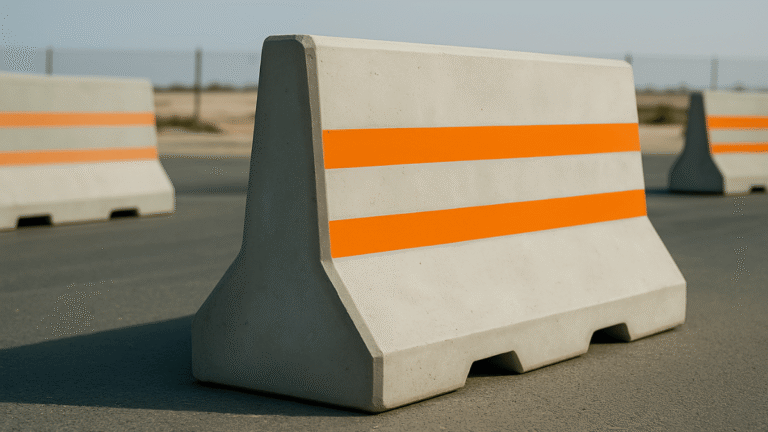
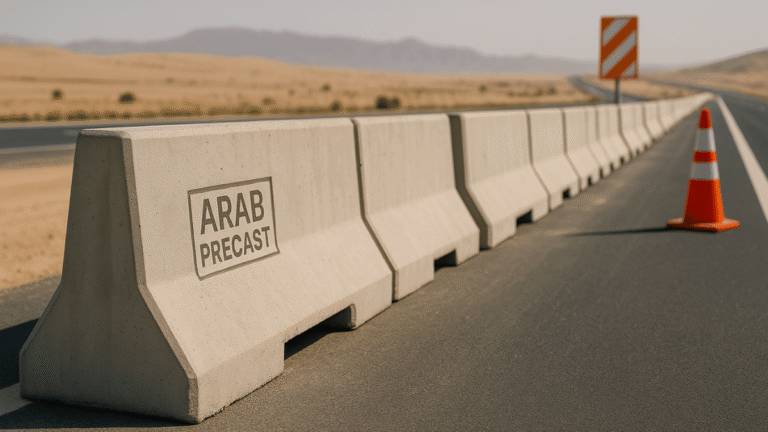
This is the barrier you’ll see from Dubai to Fujairah. It has a classic sloped face that helps redirect a vehicle back onto the road during a glancing impact.
- Typical Size: 3m long, 800mm high.
- Best For: Urban roads, construction site perimeters, and lower-speed highways (80km/h or less).
- Why it works: It’s cheap, widely available, and easy to replace if damaged.
2. The F-Type (High-Speed Essential)
If you’re working on E-roads (like E311 or E611) or any highway with speeds over 100km/h, the RTA will likely mandate F-Type barriers.
Unlike the Jersey, the F-Type has a steeper lower slope. This design is crucial because it prevents “vehicle climbing.” At high speeds, a standard Jersey can sometimes act as a ramp, causing a car or truck to flip. The F-Type’s geometry keeps the tires on the ground during an impact.
- Typical Size: 4m long, 1067mm high.
- Best For: Expressways, medians, and high-risk curves.
3. Single-Slope & Temporary Units (The Quick Movers)
For short-term lane closures—like night works for DEWA or Etisalat maintenance—contractors often prefer single-slope barriers. They are lighter (easier to move with a smaller crane) and provide protection from just one side.
- Best For: Temporary traffic diversions and tight urban work zones.
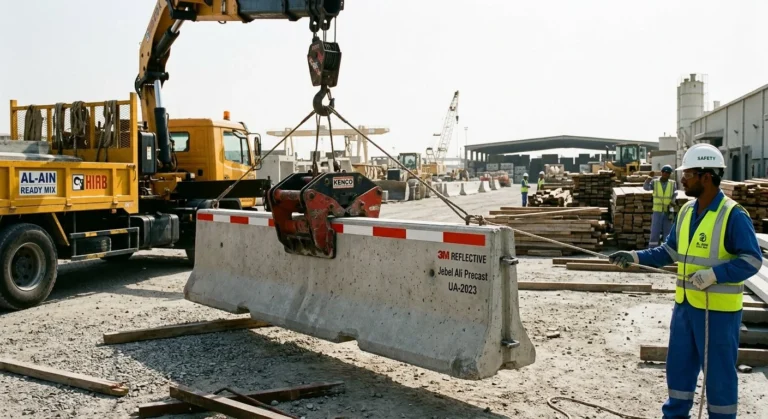
Field Note: Every barrier we cast comes with lifting hooks or forklift pockets. Never try to drag a 2-ton concrete block into place; it damages the base and voids your warranty.
Passing the Inspector: RTA & DMT Rules You Can’t Ignore
The biggest bottleneck we see isn’t manufacturing—it’s paperwork. If your barriers don’t meet the local authority’s specific codes, they won’t pass the site inspection, and you’re looking at a stop-work order.
Here is the checklist we use to ensure every load leaves our yard inspection-ready:
For Dubai (RTA Standards):
- Concrete Strength: Must be Grade 40 (C40) minimum. We test every batch and provide the crush certificates.
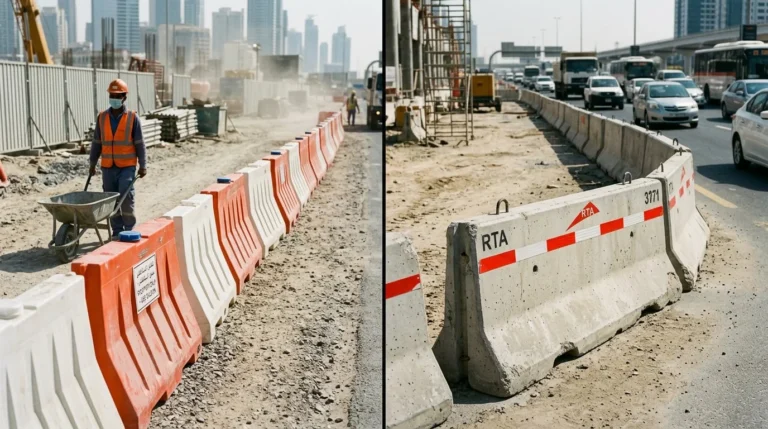
- Reflective Tape: Needs to be Class 2 or higher (usually 3M or equivalent) in yellow/white or red/white patterns.
- Crash Rating: Highway barriers usually need an N2 or H1 rating certification.
- Interlocking: For runs longer than 100 meters, barriers must be physically connected. Loose barriers are an automatic fail.
For Abu Dhabi (DMT Standards):
- Traceability: Every single unit must be stamped with the batch number, manufacturing date, and supplier ID.
- Surface Finish: No honeycombing or “bug holes.” The finish must be smooth enough for the inspector to sign off without hesitation.
- Coastal Specs: If the project is near the Corniche or on an island, we switch to sulfate-resistant cement to stop rebar corrosion from the salt air.
Pro Tip: Don’t wait until the barriers are on the road to submit your documents. If you’re navigating the exact RTA and DMT paperwork requirements for your emirate, Arab Precast provides a “Compliance Pack” (drawings, mix designs, and test reports) before delivery so your consultant can review it ahead of time.
Drop, Lock, & Level: How to Install Without Rejection
Installing concrete road barriers looks simple, but poor placement is the #1 reason projects fail final handover.
1. Prepare the Base:
You cannot set a heavy concrete barrier on loose sand or soft asphalt. If the ground isn’t compacted, the barriers will settle unevenly, creating gaps that compromise the interlock and look terrible to inspectors.
2. The “String Line” Rule:
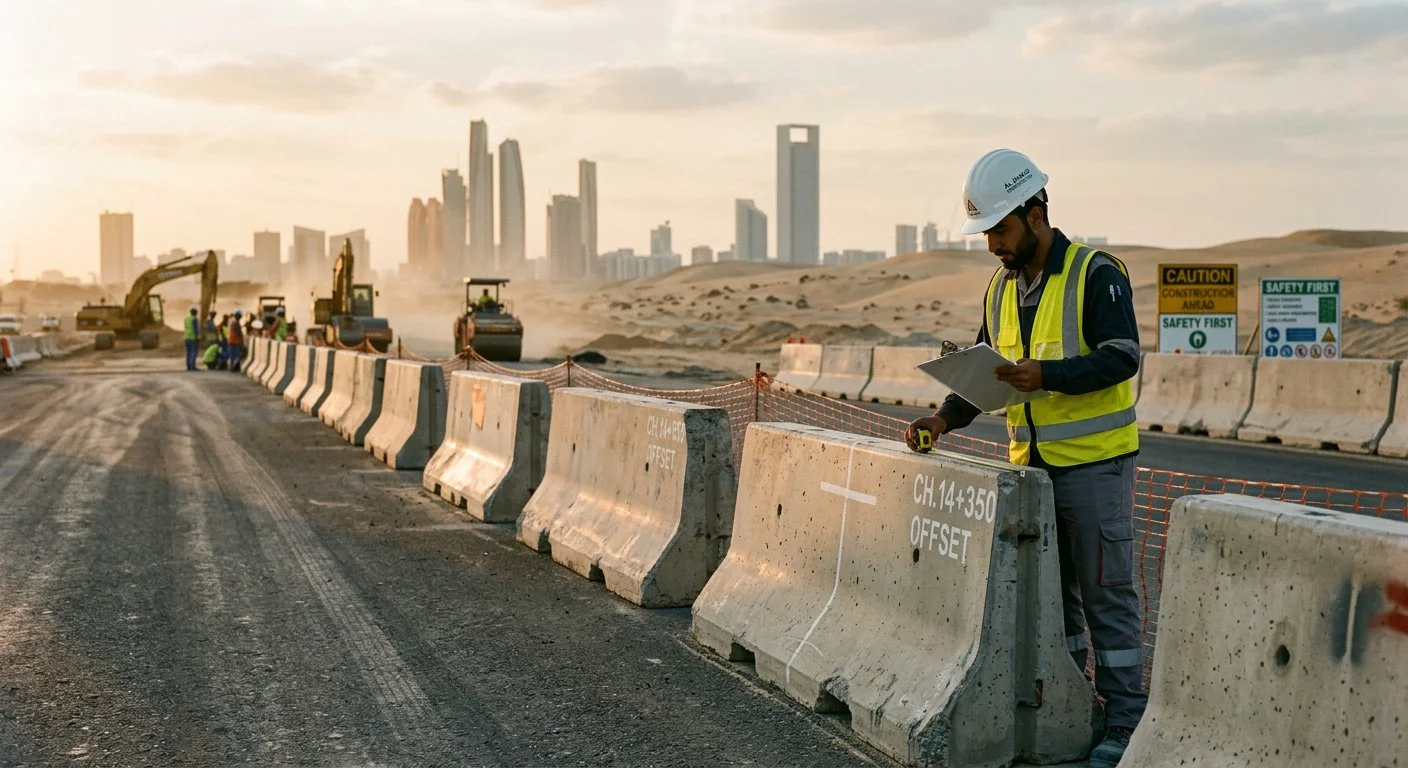
Before the crane drops the first unit, set up a laser level or string line. A straight run of barriers looks professional; a wavy one looks like an amateur job.
3. Interlocking is Key:
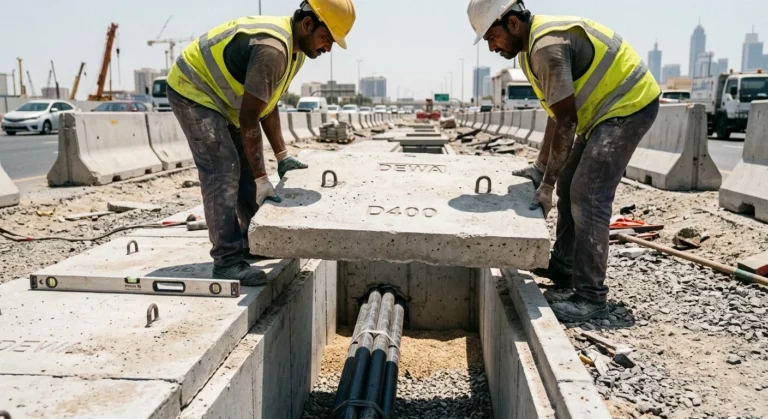
On highways, barriers must touch. If there’s a gap between units, a vehicle can snag on the edge during a crash, leading to catastrophic rollovers. Use steel pins or heavy-duty clips to lock them together.
4. End Treatments:
The start and end of a barrier run are the most dangerous points. If a car hits the blunt end of a barrier, it can spear into the traffic lane. Always use a tapered “end treatment” or anchor the end unit securely into the ground.
Beating the Heat: Maintenance in the UAE Climate
Let’s be honest: the UAE summer is brutal. 50°C heat, sandstorms, and occasional flash floods take a toll on infrastructure.
- Fading: UV rays bleach reflective tape quickly. Plan to restripe or replace tape every 6–12 months to maintain night visibility.
- Spalling: If a barrier gets hit by debris or a vehicle, the concrete can chip off (spalling), exposing the rebar. In coastal areas, exposed rebar rusts fast. Patch these chips immediately with epoxy mortar.
- Stability: After the rare heavy rains, check the base of your barriers. Water runoff can wash away the soil underneath, leaving them unstable.
The ROI Reality Check: Rent, Buy, or Buyback?
We get this question every day. The answer depends entirely on your timeline, but we’ve broken down the exact costs of renting vs buying concrete barriers in the UAE so you can run the numbers for your specific project.
- Rent it if: Your project is under 6 months, or it’s a temporary event like the Dubai Airshow or a marathon. You save on logistics and don’t have to worry about storage after the job is done.
- Buy it if: You’re building a permanent road, a warehouse perimeter, or a long-term industrial site. The break-even point is usually around 8–10 months. After that, owning the asset is cheaper than paying monthly rental fees.